PC Pistol Creek Termite Co. termite treatment · Maryville, TN

Termite Treatment

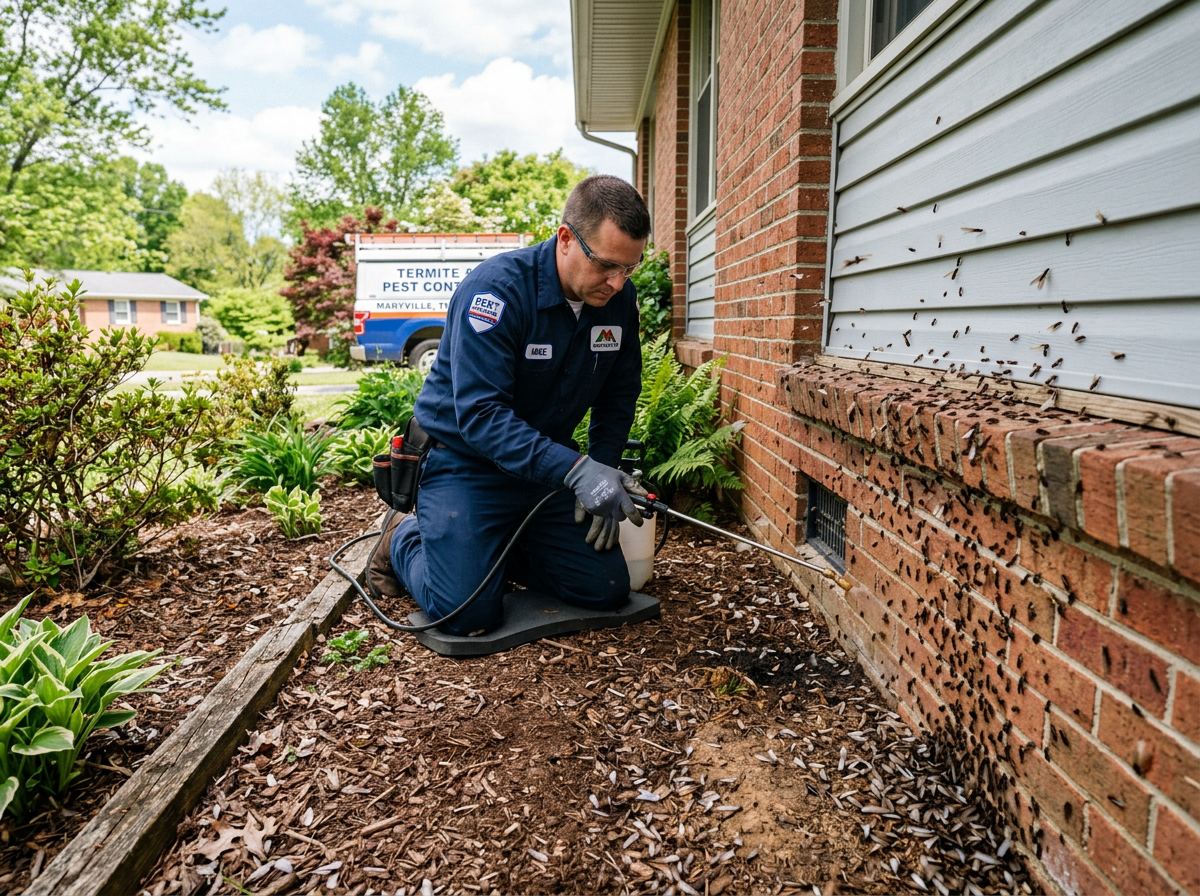
Termite Swarmers in Maryville, TN

Spotting termite swarmers around Maryville homes points to active colonies in vented crawl spaces that need targeted inspection and soil treatment.

  • ✓Mon-Fri 9am-9pm
  • ✓Termite Inspection & Treatment
  • ✓Maryville, Alcoa & Blount County

Termite swarmers appear in Maryville from March through May when warm humid air triggers reproductive alates to leave the colony. In Blount County brick ranches built between the 1960s and 1990s, these winged insects often exit through foundation vents or around porch slabs where red clay retains moisture against sill plates. Homeowners frequently notice discarded wings on windowsills or near baseboards after the brief flight, which lasts only a day or two but signals an established nest below the floor joists.

Eastern subterranean termites create mud tubes along piers and foundation walls to reach wood-to-soil contact points common under older split-levels in Eagleton Village and Wildwood. A moisture meter reading on floor joists helps locate active areas where humidity from the crawl space keeps the colony thriving. Liquid termiticide applied through trenching and rodding along the exterior perimeter, plus drilling at slab edges, breaks those foraging routes without disturbing the home's interior.

Pre-construction soil treatment and vapor barriers installed during remodels reduce future risk, yet many Maryville properties still lack them. Bait station monitoring provides ongoing checks around Greenbelt Park neighborhoods where mature trees and mulch beds keep soil damp. The focus stays on stopping new swarmers from emerging rather than chasing wings after the fact.

Technician insight

In Maryville the thing that catches most people out with Termite Swarmers is how the red clay under those 1970s vented crawl spaces in Eagleton Village holds moisture right against the sill plates. Homeowners see wings in spring and assume one treatment will end it, yet they often overlook the wood-to-soil contact hidden behind the vapor barrier gaps that keep the colony fed year after year.

Wings Found Near Porch in Wildwood

A homeowner noticed piles of wings by the back door of a 1978 brick ranch. Inspection revealed multiple mud tubes along the crawl space piers where the porch slab met the original foundation. Treatment focused on drilling at the slab edge and trenching the perimeter; follow-up checks showed no new activity during the March-May swarm window.

Termite Swarmers Services We Offer

✓Swarmer Wing Collection and Analysis

Collecting and examining discarded wings from windows and baseboards confirms whether the insects are Eastern subterranean termites versus other species common in Blount County.

✓Crawl Space Mud Tube Mapping

Technicians trace active tubes along piers, sill plates, and floor joists in vented crawl spaces typical of 1970s Maryville ranches to locate colony pathways.

✓Moisture Source Identification

Readings from a moisture meter around red clay soil and wood-to-soil contact points reveal why swarmers keep returning to homes in Alcoa and Downtown Maryville.

✓Perimeter Trenching and Rodding

Liquid termiticide applied in trenches and rods around the foundation interrupts foraging routes that lead from the soil into Blount County crawl spaces.

✓Slab and Porch Drilling Treatment

Drilling at concrete edges where additions meet the original structure stops termites from bypassing exterior barriers in split-level homes.

How it works

  1. 1

    Initial Swarmer Report Review

    Technicians discuss where wings or tubes were noticed and schedule a visit during Mon-Fri 9am-9pm hours to inspect the specific areas in the Maryville home.

  2. 2

    Crawl Space and Foundation Walkthrough

    Every pier, sill plate, and vent is checked for tubes or moisture issues while noting wood-to-soil contact common in 1960s-90s Blount County construction.

  3. 3

    Targeted Soil Application

    Trenching, rodding, and drilling deliver treatment along the exterior and slab edges to cut off colony access without interior disruption.

  4. 4

    Follow-Up Station Placement

    Bait stations are set at key points and scheduled for monitoring to track activity around the property through the rest of the season.

What's Included in the Visit

Full Termite Inspection

We inspect the foundation, crawl space, attic, and accessible interior areas for live activity, mud tubes, and damage. The inspection includes moisture readings and thermal imaging to find hidden infestations that visual checks miss.

Species Identification

We confirm whether you have subterranean termites, drywood termites, or another wood-destroying insect. Correct identification determines whether we apply a soil barrier, install bait stations, or use a combination approach.

Liquid Barrier Application

We trench and treat the foundation line with Termidor or Taurus SC, creating a continuous treated zone in the soil. This stops termites from re-entering the structure and eliminates foragers already in contact with treated soil.

Bait Station Installation

When baiting is the better fit, we install Sentricon or Advance Termite Bait stations around the perimeter. These stations use a bait matrix that termites carry back to the colony, gradually eliminating the population.

Crawl Space Moisture Check

We inspect for crawl space moisture attracting termites and recommend vapor barrier or drainage corrections when needed. Moisture is one of the biggest reasons termite re-infestation after treatment happens in Maryville homes.

Written Report and Follow-Up

You receive a written summary of findings, treatment methods, and products used, plus a follow-up schedule. We return at 30 and 90 days to verify activity has stopped and adjust the program if needed.

Tools and Methods We Use

Moisture meter

Detects elevated moisture in wood and crawl spaces, which is one of the strongest indicators of active termite activity and a common reason for re-infestation.

Thermal imaging camera

Reveals temperature differences behind walls and under floors, helping us locate hidden infestations without opening every surface.

Boroscope

Lets us look inside wall voids, sill plates, and framing cavities to confirm activity and assess damage without major demolition.

Soil injector rod

Delivers liquid termiticide into the soil along the foundation line, creating a continuous treated zone that stops termites from re-entering.

Trenching shovel

Used to dig the shallow trench along the foundation so termiticide can be applied correctly and evenly.

Bait station installation tool

Sets Sentricon and Advance Termite Bait stations at the correct depth and spacing around the perimeter.

Pistol Creek Termite Co. — termite treatment in Maryville

Good to know

Termite Swarmers — FAQs

Still have questions? We're happy to talk it through.

(865) 298-9363
+ Do termite swarmers mean the colony is inside the walls?
Swarmers usually come from soil colonies that have built tubes into the crawl space; they rarely nest inside finished walls of Maryville homes.
+ How long do swarms last in Blount County?
Eastern subterranean flights occur over one or two days in March through May when humidity rises after rain.
+ Can I just vacuum the wings and ignore the rest?
Wings are only the visible sign; active tubes and moisture sources in the crawl space still need inspection to stop the colony.
+ Will swarmers return next spring after treatment?
Proper perimeter application and station monitoring reduce the chance of new flights from the same colony, though neighboring properties can still produce swarmers.

Need Termite Treatment in Maryville, TN?

Talk to a local termite treatment company serving Maryville and nearby neighborhoods.

Call now Request a callback