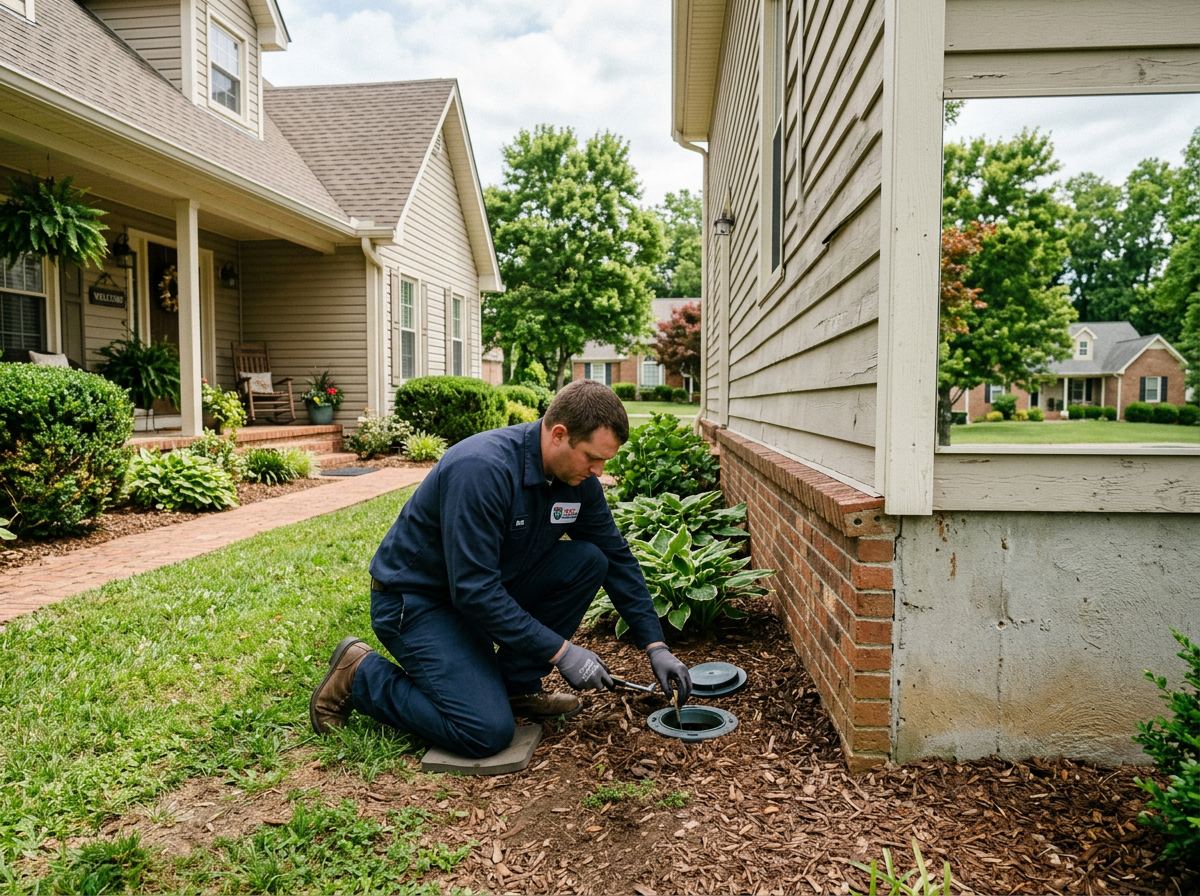
Eastern subterranean termites in Blount County often enter 1960s-90s brick ranches through wood-to-soil contact in vented crawl spaces where red clay holds moisture through humid summers. Bait stations placed along the foundation perimeter intercept foraging workers before they reach sill plates and floor joists. Stations use cellulose matrix that termites carry back to the colony, interrupting activity without drilling every slab or porch edge.
Placement begins with checks for mud tubes on piers, discarded wings near windows, and moisture meter readings at sill plates. In Maryville neighborhoods like Eagleton Village and Wildwood, stations sit every ten to fifteen feet, anchored below grade to resist shifting from seasonal freeze-thaw cycles. Monthly or quarterly visits confirm activity, replace consumed bait, and adjust locations where Greenbelt Park runoff increases soil moisture near foundations.
Homeowners in Downtown Maryville and Alcoa often combine bait stations with vapor barriers and gutter corrections to reduce attractants. The system works year-round but sees peak value March through May when swarmers appear. Monitoring logs track station consumption across the property, allowing adjustments before termites reach interior framing in split-level layouts common throughout Blount County.
Technician insight
In Maryville the thing that catches most people out with Termite Bait Stations is red clay expanding and contracting around vented crawl spaces of 1960s-90s brick ranches; stations placed too shallow get pushed out of alignment after a wet spring and lose contact with foraging trails.
Eagleton Village Crawl Space Monitoring
Mud tubes appeared on piers beneath a 1978 split-level after March rains. Inspection found active stations near the front foundation but none along the rear where runoff pooled. Additional stations were added at the back and existing ones refreshed; three months later consumption dropped and no new tubes formed.
Termite Bait Stations Services We Offer
✓Foundation Perimeter Bait Placement
Stations installed at consistent intervals along brick ranch and split-level foundations intercept foraging trails before they reach sill plates and floor joists in vented crawl spaces.
✓Crawl Space Station Monitoring
Quarterly inspections check bait consumption, replace stations showing activity, and note new mud tubes on piers common in Maryville's red clay during humid summers.
✓Slab Edge and Porch Station Integration
Stations positioned at expansion joints and porch perimeters address termite entry points where concrete meets soil around 1970s-80s homes in Eagleton Village.
✓Pre-Construction Bait System Layout
Stations planned during new builds in Blount County reduce future risk by establishing a treated zone before backfill covers the foundation footings.
✓Seasonal Bait Refresh and Adjustment
Stations receive fresh matrix after heavy spring swarms and are relocated when runoff near Wildwood or Greenbelt Park increases local soil moisture.
How it works
- 1
Crawl Space And Perimeter Inspection
Technicians examine piers, sill plates, and soil contact points for mud tubes and moisture levels typical in Maryville's red clay during warm months.
- 2
Station Placement Along Foundation
Bait stations are installed at measured intervals around the exterior and inside accessible crawl space areas of 1960s-90s brick homes.
- 3
Initial Bait Loading And Documentation
Each station receives cellulose matrix and is logged with location details for future reference during Blount County monitoring cycles.
- 4
Ongoing Monitoring Visits
Return visits confirm activity, replenish consumed bait, and adjust placement where seasonal humidity or runoff affects station performance.