Eastern subterranean termites thrive in Blount County's red clay soils where moisture lingers beneath 1960s through 1990s brick ranches and split-levels. Homeowners often notice discarded wings near windowsills or mud tubes along pier blocks and sill plates during the March through May swarm season. These colonies exploit wood-to-soil contact points and travel through floor joists once they reach the humid environment created by vented crawl spaces.
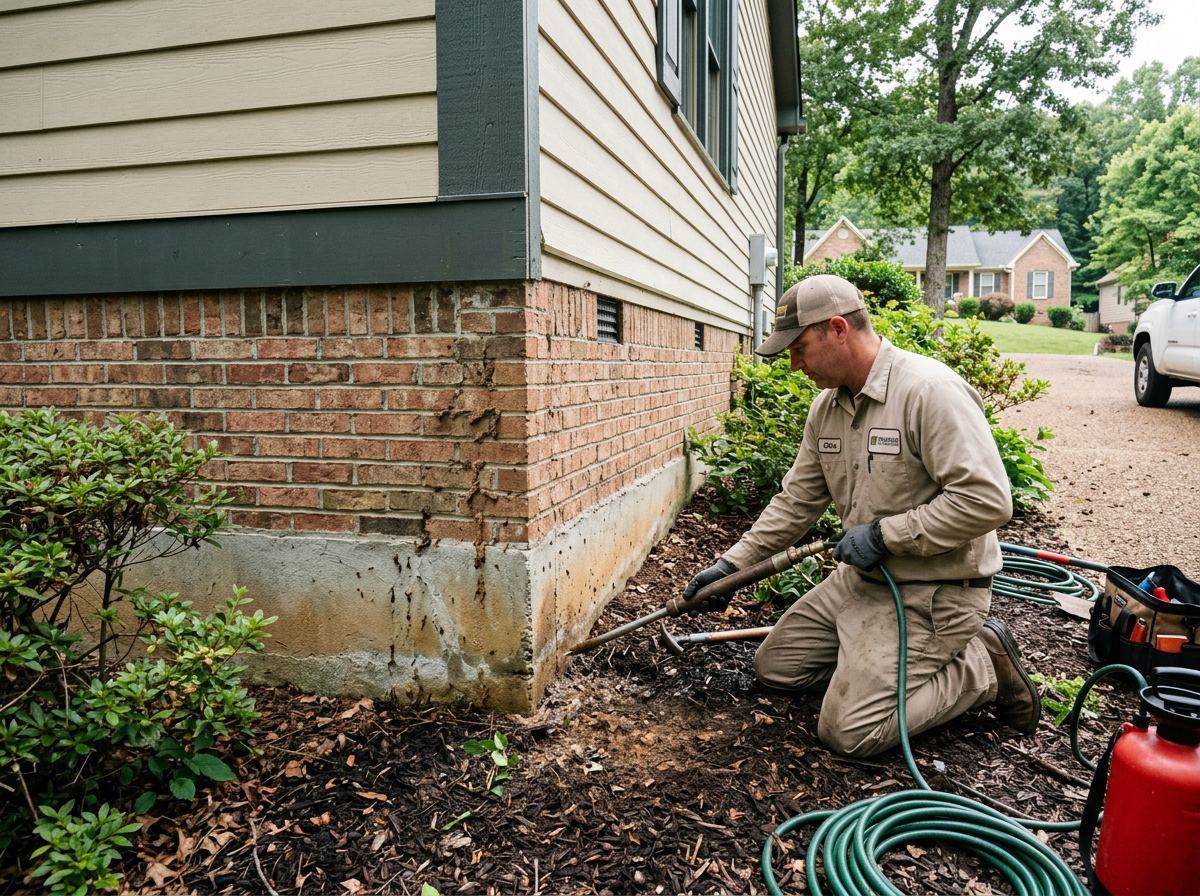
Treatment begins with a thorough check using a moisture meter to locate active areas along foundation walls and under slabs. Liquid termiticide is applied via trenching and rodding around the perimeter while slab and porch drilling reaches voids beneath concrete additions common in Eagleton Village and Wildwood properties. Bait station monitoring follows initial work to track colony activity over time without disturbing finished interiors.
Pre-construction soil treatment protects new builds near Maryville College and the Greenbelt Park area before framing begins. Vapor barriers installed over bare soil reduce the humidity that draws colonies upward into sill plates. Gutters that direct water away from foundations and removal of mulch or firewood piles against the house limit the conditions that allow termites to establish in Alcoa and Downtown Maryville neighborhoods.
Technician insight
In Maryville the thing that catches most people out with Subterranean Termites is how fast colonies move once they hit the red clay under those 1970s vented crawls. Homeowners often clear visible mud tubes but leave the wood-to-soil contact at the back of the house untouched, so the colony just rebuilds the tubes within weeks. Checking the entire perimeter after heavy spring rains makes the difference between a one-time visit and repeated callbacks.
1968 Brick Ranch in Eagleton Village
The homeowner noticed wings near the back door each morning. Inspection found active mud tubes on multiple piers and elevated moisture at the sill plate where mulch had been piled against the brick. Treatment included trenching the full perimeter, drilling the rear porch slab, and placing bait stations. No new tubes or swarmers appeared on the follow-up visit.
Subterranean Termites Services We Offer
✓Mud Tube Inspection and Removal
Technicians locate and clear mud tubes on piers and foundation walls in vented crawl spaces typical of Maryville brick homes to interrupt termite travel routes.
✓Swarmer and Wing Evidence Assessment
Field checks identify discarded wings and swarmers near baseboards and window frames during peak March-May activity in Blount County neighborhoods.
✓Liquid Termiticide Trenching and Rodding
Perimeter trenching combined with rodding delivers treatment along foundation walls where red clay soil meets wood-to-soil contact points.
✓Slab and Porch Drilling Treatment
Drilling through concrete additions common on 1970s split-levels allows termiticide placement beneath porches and garage slabs in Alcoa and Loudon areas.
✓Bait Station Monitoring Program
Stations placed around the exterior track colony movement after initial treatment on properties near the Blount County Courthouse.
✓WDI Inspection and Termite Letter
Detailed reports document activity in sill plates and floor joists for real estate transactions involving older Maryville College-area homes.
How it works
- 1
Crawl Space Entry and Visual Mapping
Technicians enter the vented crawl space to mark mud tubes, moisture readings, and wood-to-soil contact on 1960s-1990s brick ranches.
- 2
Perimeter Trenching and Drilling
Liquid termiticide is placed in trenches around the foundation with additional drilling under slabs and porches where needed.
- 3
Bait Station Installation
Stations are positioned at intervals along the exterior to monitor ongoing colony activity in red clay soils.
- 4
Follow-Up Inspection
Return visits check station activity and confirm no new mud tubes or swarmers appear in treated Maryville homes.