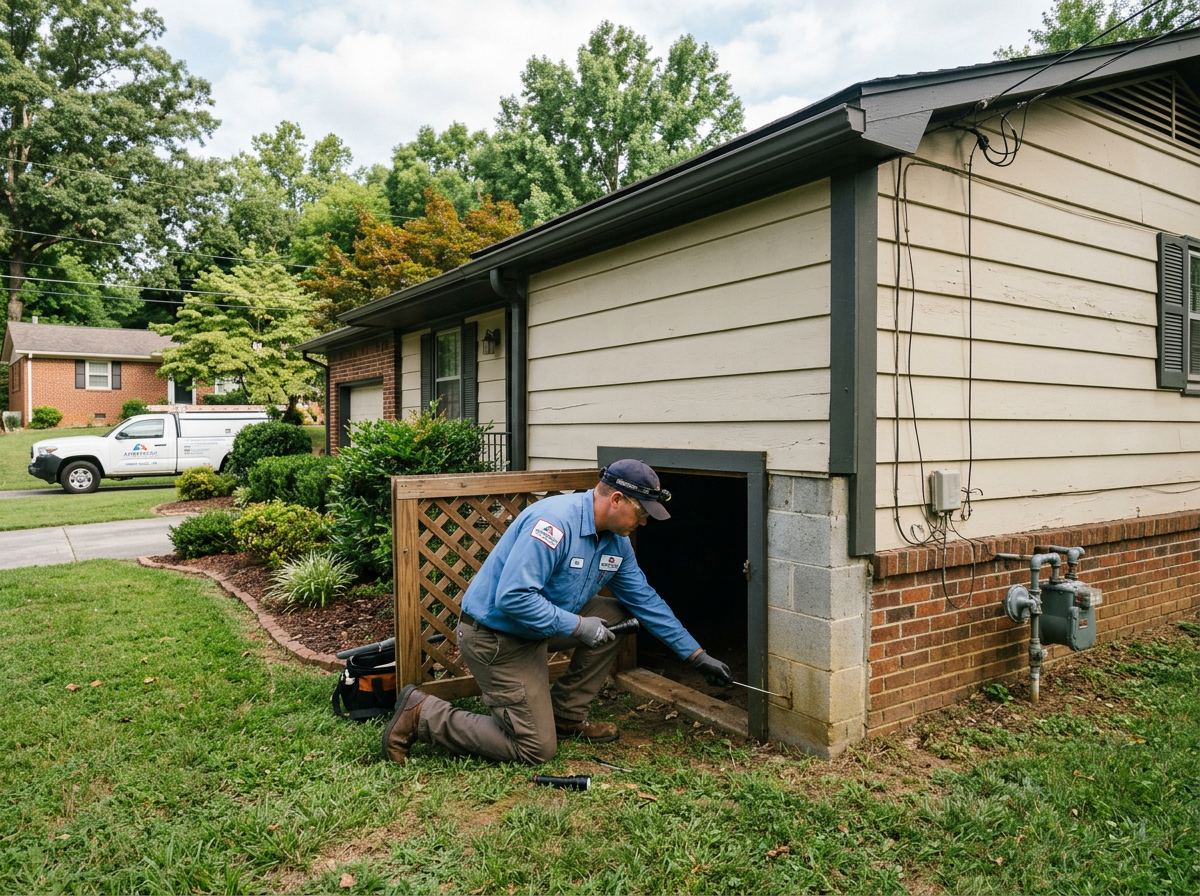
Maryville homes built between the 1960s and 1990s often sit on vented crawl spaces over red clay that retains moisture through humid summers. These conditions create entry points where eastern subterranean termites reach sill plates and floor joists. An inspection starts with checking for discarded wings near windows and doors, then moves under the house to look for mud tubes along piers and foundation walls. Wood-to-soil contact around older split-levels and brick ranches near Greenbelt Park or the Blount County Courthouse commonly goes unnoticed until activity appears.
Technicians use moisture meters on joists and subflooring to locate damp areas that attract termites before visible damage shows. In neighborhoods like Eagleton Village and Wildwood, gutters that empty too close to the foundation and thick mulch beds around the perimeter add to the risk. The inspection also covers slab edges and porch perimeters where drilling may later be needed. Homeowners in Alcoa and downtown Maryville frequently discover that seasonal swarms from March through May trace back to these hidden spots.
Pre-construction soil treatment records are reviewed when available, and vapor barriers are examined for gaps that allow termite movement. The process stays focused on current conditions rather than future promises, giving owners a clear picture of what exists in their specific crawl space or foundation. This approach fits the four-season climate where cool winters push activity deeper into protected wood until spring warmth triggers swarming.
Technician insight
In Maryville the thing that catches most people out with termite inspection is how red clay around 1960s-90s vented crawl spaces holds summer humidity right against the joists, so activity stays hidden until March-May swarms appear in kitchens or near windows.
Eagleton Village Split-Level
Homeowner noticed wings near a back door in April. Inspection found mud tubes on two piers and elevated moisture on joists above red clay. The assessment mapped the extent along the foundation without disturbing the structure. Follow-up options were outlined based on the exact locations identified.
Termite Inspection Services We Offer
✓Crawl Space Inspection
Examines piers, sill plates, and floor joists in vented crawl spaces common to Maryville brick ranches for mud tubes and moisture issues.
✓WDI Inspection and Termite Letter
Provides documentation of current termite activity or damage for real estate transactions involving homes near Maryville College or the courthouse.
✓Mud Tube and Foundation Wall Assessment
Locates active and inactive mud tubes along foundation walls and piers where termites travel from red clay soil into the structure.
✓Wood-to-Soil Contact Evaluation
Identifies direct contact points between soil and untreated wood around older split-levels in Blount County that allow termite access.
✓Moisture Meter Reading of Structural Wood
Measures moisture levels in joists and subflooring to pinpoint areas where humidity from humid summers supports termite colonies.
How it works
- 1
Exterior Perimeter Walk
Check siding, gutters, and grade around the home for signs of termite entry near mulch beds and downspouts.
- 2
Crawl Space Entry and Survey
Enter the vented space to inspect piers, sill plates, and joists for mud tubes while noting wood-to-soil contact.
- 3
Moisture and Activity Documentation
Use a moisture meter on suspect wood and record any discarded wings or active tubes found in the structure.
- 4
Findings Summary and Next Steps
Review results on site and outline options such as liquid trenching, bait stations, or slab drilling if activity is confirmed.