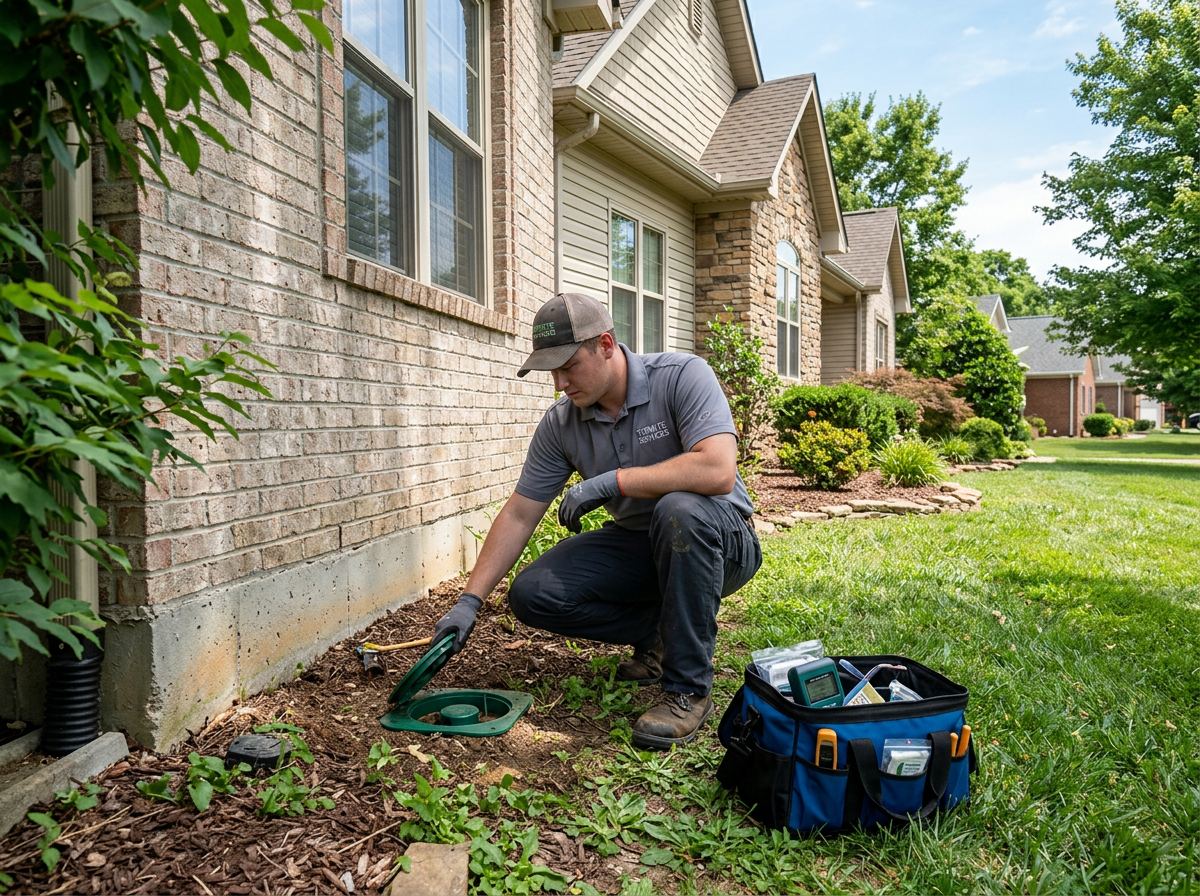
Maryville homes built between the 1960s and 1990s often sit on red clay with vented crawl spaces that stay damp through humid summers. Eastern subterranean termites travel along sill plates and floor joists where wood meets soil, especially after spring swarms from March through May. Regular monitoring catches new mud tubes on piers before they reach living areas, and technicians use moisture meters to spot conditions that draw colonies closer to foundations in neighborhoods like Eagleton Village and Wildwood.
Bait stations placed around the perimeter let technicians watch for feeding activity without disturbing the structure. In areas near Greenbelt Park and the Blount County Courthouse, older split-levels frequently show discarded wings near porches after rain, signaling nearby colonies. Monthly or quarterly visits track station consumption and note any new tube formation on foundation walls, giving homeowners a clear record of activity levels through the four-season cycle of warm summers and cool winters.
Monitoring also covers slab edges and porch perimeters where termites can enter through expansion joints. Crews check for wood-to-soil contact around mulch beds and firewood stacks common in Alcoa and Downtown Maryville yards. When activity appears, stations receive fresh bait and additional units are added near active zones, keeping the focus on observation rather than immediate excavation of trenches.
Technician insight
In Maryville, the thing that catches most people out with Termite Monitoring is how red clay around 1970s split-levels in Eagleton Village stays wet for days after a summer storm, letting termites follow sill plates right under the vents before the next scheduled check.
Crawl Space Monitoring In Wildwood
A homeowner saw wings near the back door after a warm rain. Inspection revealed fresh mud tubes along two piers and high moisture near the vapor barrier. Bait stations were added along that wall and checked monthly through the summer. No new tubes formed and station activity remained low after the initial feeding period.
Termite Monitoring Services We Offer
✓Bait Station Installation
Stations are placed at intervals around the foundation to intercept foraging termites before they reach sill plates in crawl spaces.
✓Quarterly Monitoring Visits
Technicians return on a set schedule to inspect stations, remove old tubes, and record any feeding activity in red clay soil conditions.
✓Mud Tube Documentation
New and existing mud tubes on piers and foundation walls are mapped and photographed during each visit for trend tracking.
✓Moisture Meter Readings
Readings around vented crawl spaces and near porches identify damp zones that encourage termite movement along floor joists.
✓Swarm Season Checks
Extra visits during March through May focus on discarded wings and entry points common in 1970s brick ranches across Blount County.
How it works
- 1
Site Walk And Mapping
Technicians examine the crawl space, piers, sill plates, and exterior grade for existing tubes and wood-to-soil contact points.
- 2
Station Placement
Bait stations are installed at measured intervals around the perimeter and near any active zones identified during the initial inspection.
- 3
Scheduled Return Visits
Stations are opened, contents checked, and activity levels logged on each visit while new tubes are removed from foundation walls.
- 4
Activity Reporting
Findings are summarized for the homeowner with notes on moisture conditions and any adjustments made to station locations.