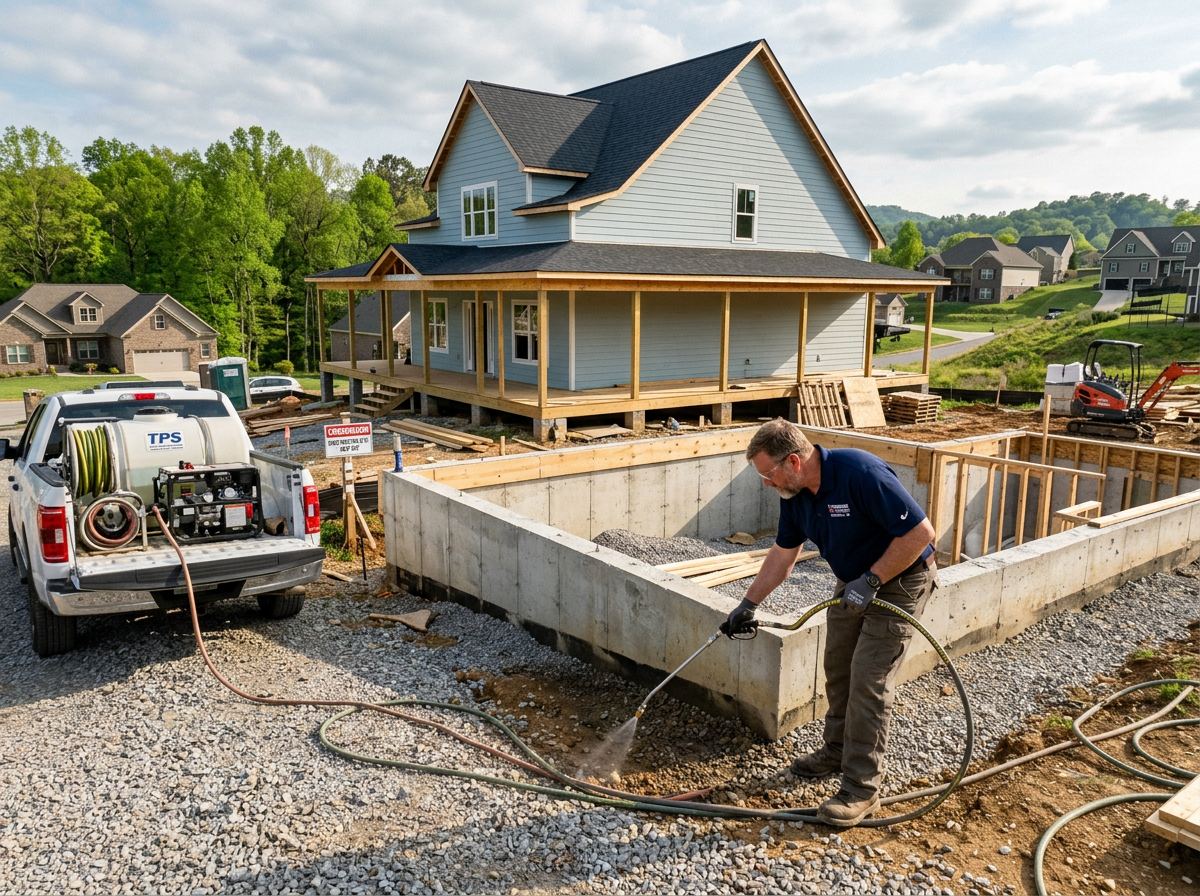
New homes on the red clay soils around Maryville and Alcoa often sit on sites where eastern subterranean termites already forage. Treatment starts by establishing a continuous treated zone beneath the future slab and along all foundation walls before any concrete is placed. Crews trench and rod the perimeter to the depth required by local soil density, then apply liquid termiticide so the product reaches the zones where termites travel upward from the ground.
Vented crawl spaces remain common in Blount County even on newer builds, so attention also goes to sill plates, floor joists, and any wood-to-soil contact points created during framing. Where porches or patios will meet the main structure, drilling and rodding are planned at the slab edge so the treatment zone stays unbroken. These steps address the March-through-May swarming season by creating a barrier before the home is enclosed and moisture levels rise inside the structure.
Greenbelt Park and nearby wooded lots in Wildwood show how quickly termite pressure returns when mulch or firewood is placed against foundations later. Pre-construction work therefore includes placement of vapor barriers and coordination with gutter and drainage details so water does not undermine the treated soil. The result is a documented treatment record that builders and buyers can reference when the home is finished.
Technician insight
In Maryville the red clay holds water longer than most builders expect, so trenches must be cut deeper on the downhill side of lots near the foothills or the barrier stays incomplete after the first heavy summer rain.
New Construction on Former Pasture in Wildwood
The builder had already framed the sill plates when the crew arrived. Inspection showed several points where backfill had been placed against untreated wood. Trenching and rodding were completed around the entire perimeter and under the planned porch before the concrete truck arrived. The home passed final inspection with a clear termite letter.
Pre-Construction Termite Treatment Services We Offer
✓Pre-Slab Soil Treatment
Liquid termiticide is applied to the entire building footprint and a perimeter band before the concrete pour to create an unbroken treated zone under the slab.
✓Perimeter Trenching and Rodding
Trenches are dug and rodded along foundation walls to reach termite foraging depth in the red clay common to Maryville and Eagleton Village lots.
✓Vapor Barrier and Moisture Integration
Vapor barriers are positioned and sealed in coordination with the termite treatment so excess moisture does not compromise the treated soil zone.
✓Sill Plate and Framing Protection
Exposed wood members that will contact soil or concrete receive targeted treatment during framing to reduce entry points for subterranean termites.
✓Bait Station Pre-Placement
Monitoring stations are installed around the lot perimeter during site work so activity can be tracked once the home is occupied.
How it works
- 1
Site Review
Plans and lot conditions are checked for wood-to-soil contact points, drainage patterns, and any existing termite evidence on or near the build site.
- 2
Soil Preparation
Trenches are excavated to proper depth around the foundation footprint and at porch and slab edges on the red clay typical of Blount County.
- 3
Termiticide Application
Liquid treatment is applied by rodding and trenching, with drilling added where slabs or porches will later cover the soil.
- 4
Documentation
Treatment records and a WDI report are prepared for the builder showing the completed barrier before any backfill or concrete work begins.