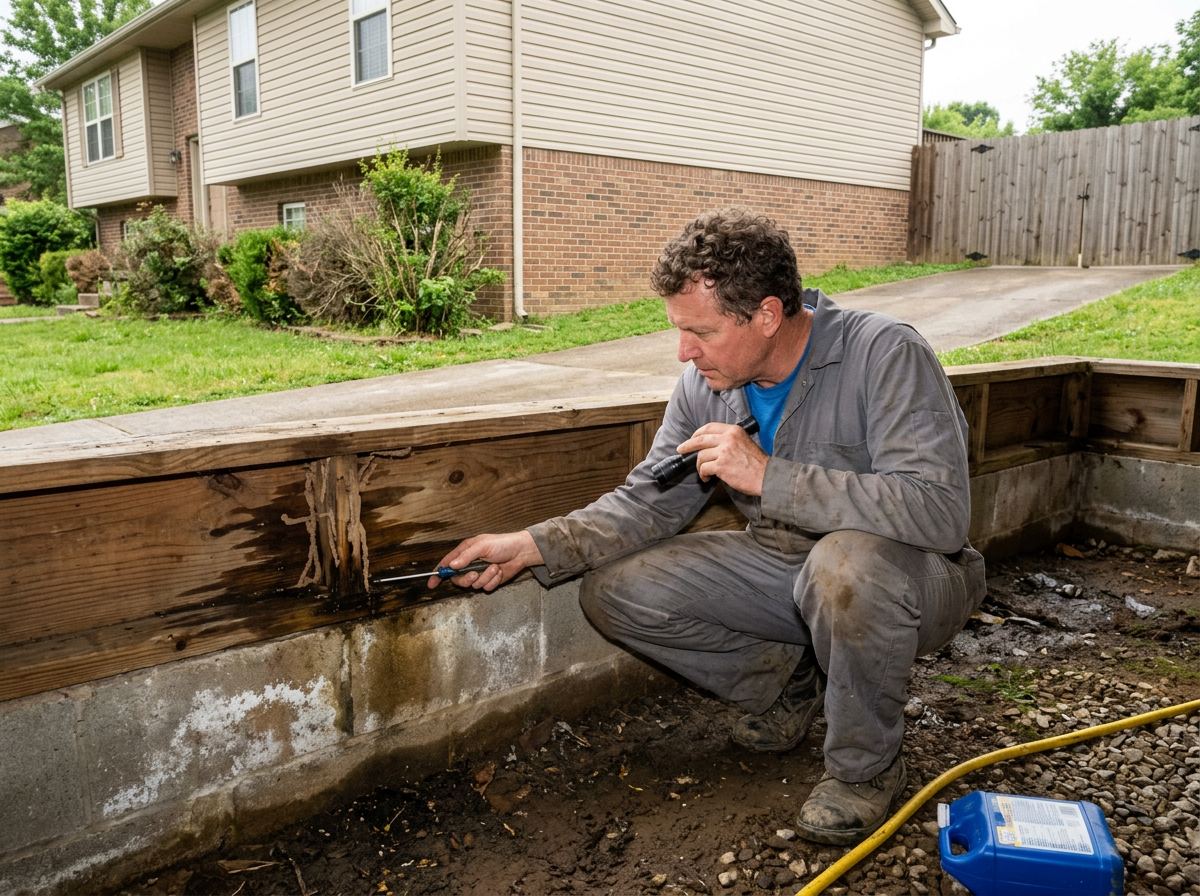
Vented crawl spaces under brick ranches and split-levels built between the 1960s and 1990s in Maryville, Alcoa, and Eagleton Village often trap humidity against sill plates and floor joists. Red clay soil holds water near pier foundations, and when gutters empty close to the structure or mulch piles up against the rim joist, moisture readings climb. Homeowners notice swarmers in spring near baseboards or discarded wings on the floor, signs that termites have found wood-to-soil contact or mud tubes running up the piers.
Moisture meter checks during inspection reveal damp zones where termites travel unseen. In these older homes, the combination of seasonal humidity and poor ventilation allows colonies to expand along floor joists without visible damage from above. Treatment focuses on breaking the moisture pathway first, then applying liquid termiticide through trenching and rodding around the perimeter and drilling slab edges where porches meet the main foundation.
Bait station monitoring follows initial treatment to track activity over time, especially in neighborhoods near Greenbelt Park and the Blount County Courthouse where mature trees and leaf litter add organic moisture. Pre-construction soil treatment on new builds and vapor barrier placement in existing crawl spaces reduce future risk. Regular checks of firewood stacks and mulch beds keep conditions from returning after service.
Technician insight
In Maryville, the thing that catches most people out with Crawl Space Moisture and Termites is how the red clay under those 1960s-90s ranches stays wet right up against the piers even after a short rain. Homeowners often add mulch or let gutters drain straight toward the vents, and that single change keeps moisture high enough for termites to keep traveling along the sill plates year after year.
Eagleton Village Split-Level Crawl Space
Homeowners noticed swarmers near baseboards in April. Inspection found mud tubes on multiple piers and moisture readings above 20 percent on floor joists where a downspout emptied against the foundation. Trenching and rodding were completed around the perimeter with additional drilling at the rear porch slab. Bait stations were installed and showed no new activity on the first follow-up check.
Crawl Space Moisture and Termites Services We Offer
✓Crawl Space Moisture Assessment
Technicians use moisture meters on sill plates, joists, and piers to locate damp areas that attract termites in Maryville vented crawl spaces.
✓Mud Tube Identification and Removal
Active and inactive mud tubes on foundation walls and piers are mapped and cleared before liquid treatment begins.
✓Wood-to-Soil Contact Correction Guidance
Areas where joists or posts touch soil are flagged and homeowners receive steps to create clearance and reduce termite access.
✓Liquid Termiticide Trenching and Rodding
Perimeter soil around crawl space foundations receives trenching and rodding to create a treated zone against Eastern subterranean termites.
✓Slab and Porch Drilling Treatment
Concrete edges at porches and additions are drilled and treated to close gaps where termites bypass exterior barriers.
✓Bait Station Monitoring Program
Stations installed around the foundation are checked on a schedule to confirm termite activity has stopped after initial treatment.
How it works
- 1
Initial Crawl Space Walk-Through
Technicians enter the vented space, check for mud tubes, measure moisture on wood members, and note wood-to-soil contact points.
- 2
Detailed Inspection and Mapping
Every pier, sill plate, and joist section is examined; locations of high moisture and termite evidence are recorded for treatment planning.
- 3
Targeted Soil Treatment
Trenching and rodding apply termiticide along the foundation while drilling addresses slab edges and porch junctions.
- 4
Follow-Up Monitoring
Bait stations are placed and checked on a schedule to verify no further termite activity in the treated crawl space.